
Counselling
Table of Content
How to Build a Career in Counselling
About the Career
Counselling is a rewarding profession dedicated to helping individuals navigate life's challenges, improve their mental well-being, and achieve personal growth through professional guidance and support.
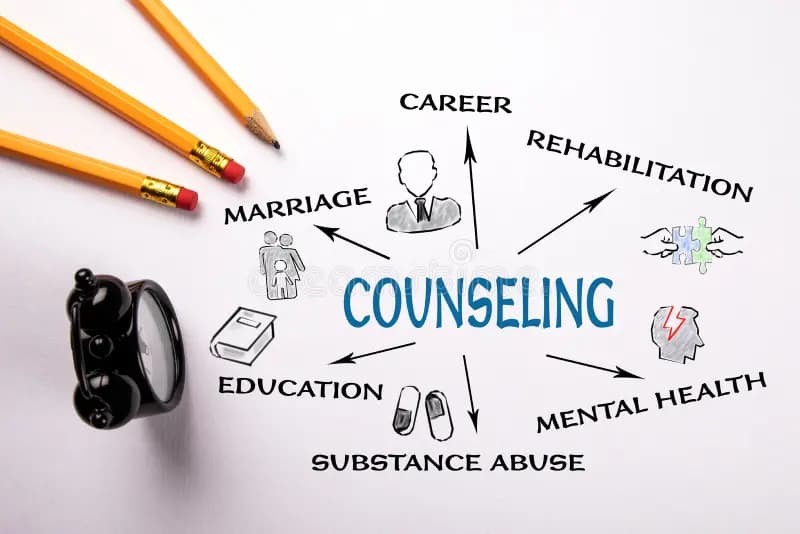
The field of counselling encompasses various specializations including mental health, career guidance, marriage and family therapy, and school counselling. It relies on communication, empathy, and evidence-based psychological techniques.
With increasing awareness of mental health, the demand for qualified counsellors is growing globally. The World Health Organization emphasizes the critical need for mental health professionals to support diverse populations.
A career in counselling offers the profound satisfaction of making a meaningful difference in people's lives while continuously developing deep insights into human behavior and emotional resilience.
Career Opportunities
Mental Health Counsellor
Support individuals facing emotional, mental, and lifestyle challenges in various settings.
Career Counsellor
Guide students and professionals in making informed career choices and transitions.
School/Educational Counsellor
Help students with academic, social, and emotional development within educational institutions.
Marriage and Family Therapist
Assist couples and families in improving communication and resolving conflicts.
Rehabilitation Counsellor
Help people with disabilities achieve personal, social, and professional goals.
Substance Abuse Counsellor
Support individuals recovering from addiction and substance use disorders.
Roles and Responsibilities
Clinical Practice
- Conduct initial assessments and intake interviews
- Develop and implement personalized treatment plans
- Facilitate individual and group therapy sessions
- Monitor and document client progress
- Provide crisis intervention support
Assessment & Diagnosis
- Administer and interpret psychological tests
- Identify behavioral patterns and emotional triggers
- Conduct research on therapeutic techniques
- Collaborate with other healthcare professionals
Professional Development
- Maintain client confidentiality and ethical standards
- Participate in clinical supervision
- Engage in continuous professional education
- Advocate for mental health awareness
Key Skills Required
Technical Skills
- Knowledge of psychological theories
- Counselling techniques and methodologies
- Understanding of mental health disorders
- Assessment and diagnostic clinical skills
- Crisis intervention protocols
Analytical Skills
- Active listening and empathy
- Observation and pattern recognition
- Critical thinking and problem-solving
- Objective assessment and interpretation
Professional Skills
- Ethical decision-making
- Cultural competence and sensitivity
- Effective verbal and written communication
- Self-awareness and emotional regulation
- Patience and resilience
Pros and Cons
Pros
- Profoundly meaningful and rewarding work
- Growing demand and career stability
- Diverse work environments and specializations
- Continuous personal and professional growth
- Flexibility in private practice options
Cons
- Can be emotionally demanding and taxing
- High responsibility and ethical complexity
- Requires extensive education and certification
- Potential for slow progress with some clients
- Administrative burden in insurance and reporting